A GEO audit is a systematic review of your website and content to determine how visible your brand is across AI-powered search engines like ChatGPT, Perplexity, Claude, Gemini, Google AI Overviews, and Copilot. Unlike a traditional SEO audit that focuses on Google's organic rankings, a GEO audit evaluates whether AI models can find, understand, and cite your content when users ask questions related to your industry.
If you've ever searched your own brand name in ChatGPT and gotten nothing back, you already know why this matters.
Why You Need a GEO Audit Right Now
AI-powered search is not a future trend. It's current reality. ChatGPT serves over 800 million weekly users. Perplexity handles 780 million monthly queries. Google AI Overviews now appear on roughly 25% of all searches. And here's the problem: ranking on page one of Google does not guarantee you'll be cited by any of these platforms.
According to AI Sightline's analysis of visibility data across 6 AI platforms, only a small fraction of brands that rank well in traditional search also appear in AI-generated responses. The gap between "ranking in Google" and "cited by AI" is real, and it's growing.
A GEO audit tells you exactly where you stand. More importantly, it tells you what to fix.
What a GEO Audit Should Check
Not all GEO audits are created equal. Some tools check a handful of surface-level signals. A proper audit should cover at least these 10 factors:
1. Content Structure and Extractability
AI models pull answers from content that is clearly structured with descriptive headings, short paragraphs, and direct answers to specific questions. If your content buries key information inside long, unstructured blocks of text, AI crawlers will skip over it in favor of a competitor who makes the answer easy to find.
What to check: Are your H2s and H3s phrased as questions people actually ask? Does each section lead with the answer before explaining it?
2. Schema Markup and Structured Data
JSON-LD schema markup helps AI models understand what your page is about, who wrote it, and how authoritative it is. Article schema, FAQ schema, Organization schema, and Product schema all give AI crawlers structured signals they can use to surface your content.
What to check: Does your site have JSON-LD markup on key pages? Is it complete and valid? AI Sightline's schema analysis can auto-detect your existing markup and flag gaps.
3. Citation Readiness
AI models cite content that contains specific, quotable statements. Think named data points, original statistics, clear definitions, and expert analysis. Vague marketing copy ("We're the leading solution for...") never gets cited.
What to check: Does your content include specific numbers, named sources, and standalone definitions that an AI model could extract and attribute?
4. Topical Authority
AI models favor brands that demonstrate deep expertise across a cluster of related topics, not just a single page. If you have one blog post about your industry and nothing else, you're invisible. If you have 15 interlinked pieces covering every angle of a topic, AI models recognize your domain authority.
What to check: Do you have content clusters around your core topics? Are they interlinked? AI Sightline's topic authority feature measures this automatically by analyzing keyword clusters and content depth.
5. AI Crawler Access
This one is surprisingly common: many websites accidentally block AI crawlers in their robots.txt file. OpenAI's GPTBot, Google's AI crawler, and other AI-specific user agents need explicit permission to access your content.
What to check: Open your robots.txt file. Look for User-agent: GPTBot, User-agent: Google-Extended, and similar AI-specific directives. If they're set to Disallow, AI models literally cannot see your site.
6. Content Freshness
AI models prioritize recently updated content, especially for queries about fast-moving industries. A page last updated in 2023 is less likely to be cited than one updated this month, even if the older page has more backlinks.
What to check: When was your core content last updated? Do your articles include publication and update dates in both the visible content and the schema markup?
7. Entity Recognition
AI models connect your brand to topics through named entities: your company name, product names, people's names, and the specific terms you want to be associated with. If your content refers to "our platform" instead of "AI Sightline," AI models can't make the connection.
What to check: Does your content explicitly name your brand, products, and key people? Are these consistent across your site and external sources like LinkedIn, Wikipedia, and industry directories?
8. Multi-Platform Visibility
Your brand might be cited by Perplexity but completely absent from ChatGPT. Each AI platform has different training data, different retrieval methods, and different citation behaviors. A real GEO audit checks all of them.
What to check: Are you monitoring your visibility across multiple AI platforms, or just one? AI Sightline tracks 6 platforms simultaneously: Google AIO, ChatGPT, Perplexity, Claude, Gemini, and Copilot, starting at $0/mo on the free plan.
9. Competitor Presence
A GEO audit isn't just about your own site. It's about understanding who AI models cite instead of you. If a competitor shows up every time someone asks about your category, you need to know what they're doing differently.
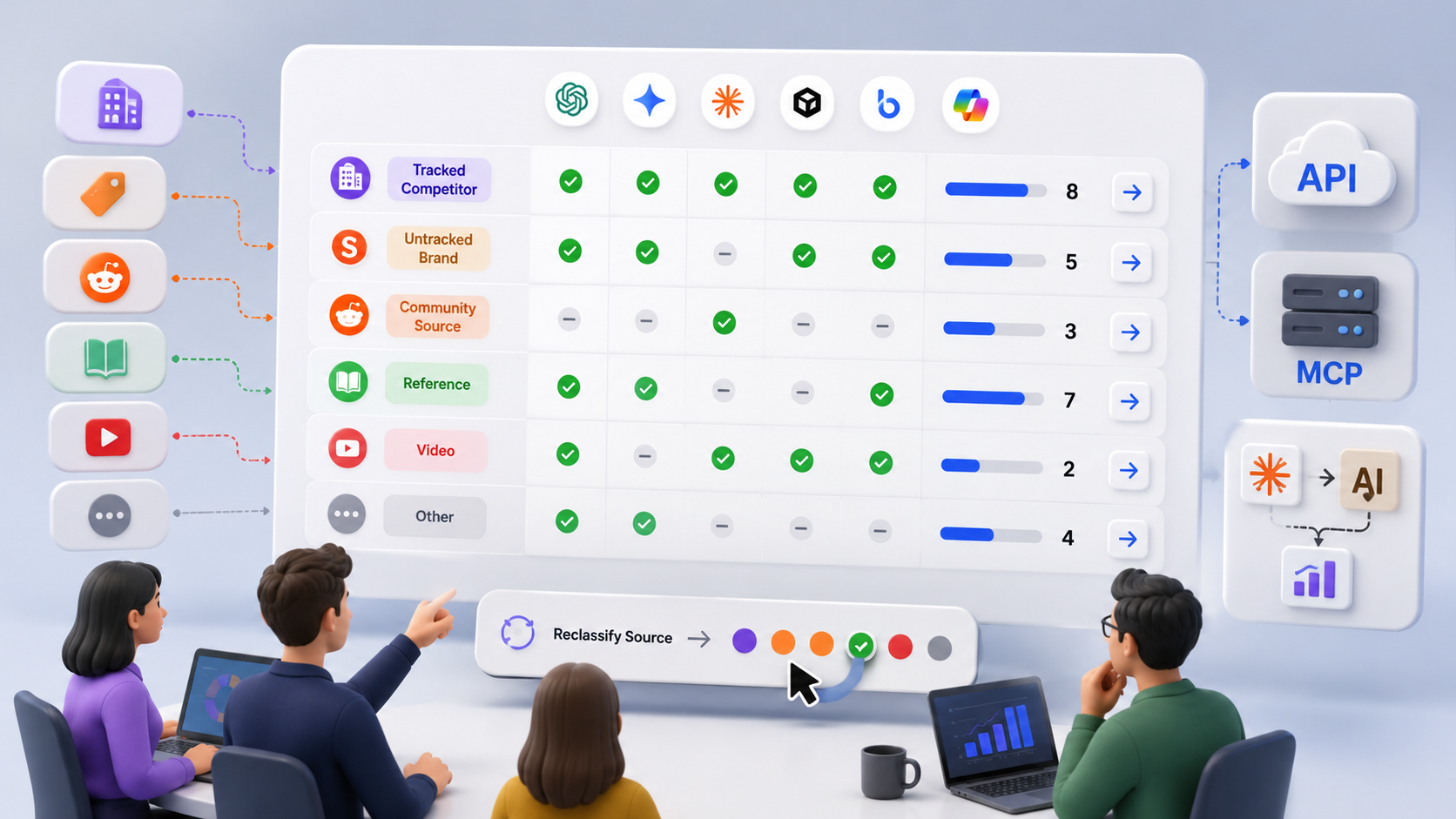
What to check: Run your target keywords through AI search engines and note which brands appear. AI Sightline's competitive benchmarking automates this across all 6 platforms.
10. Content Gaps
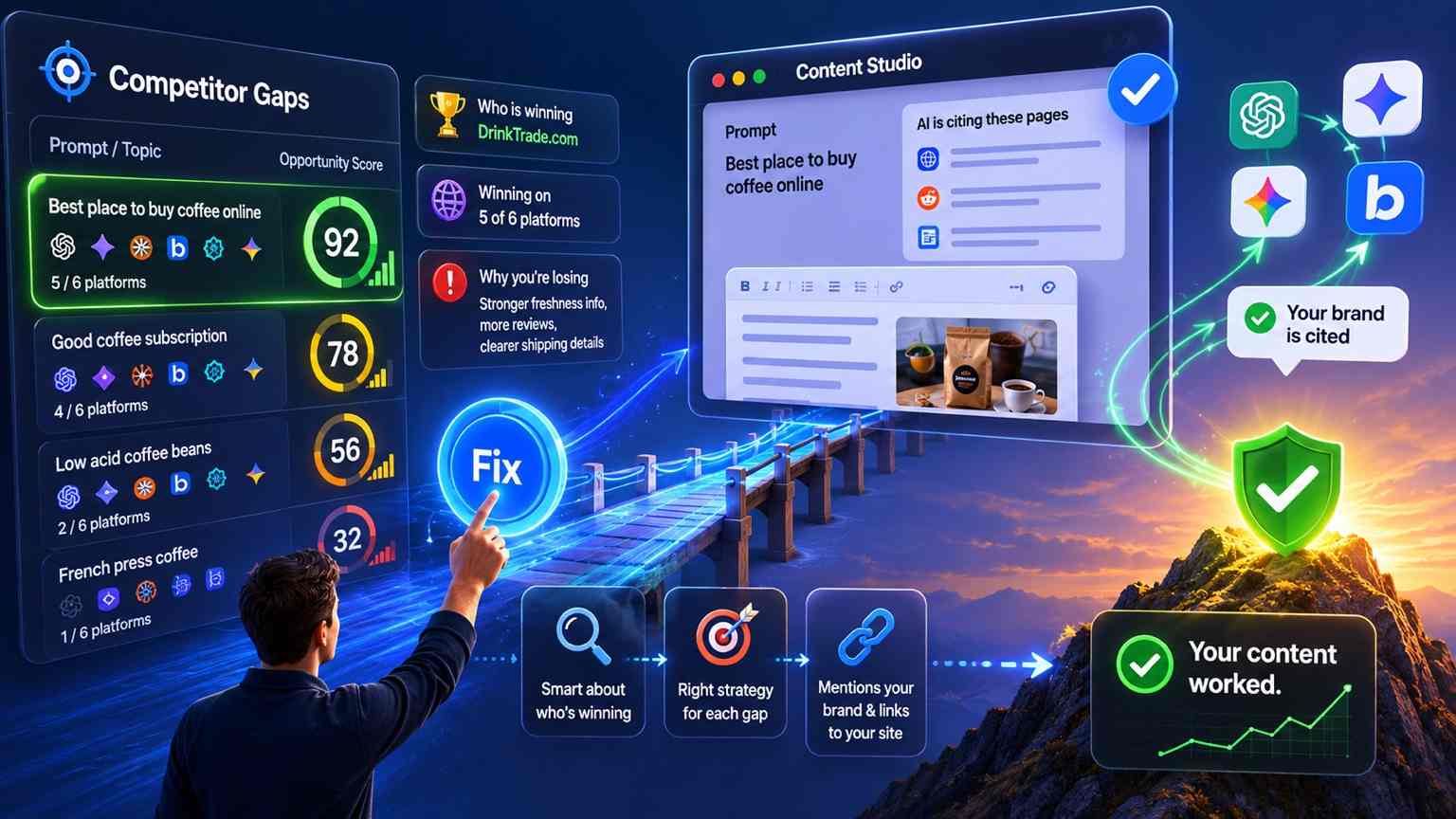
The most actionable output of any GEO audit is a list of queries where competitors get cited and you don't. These gaps represent the fastest path to improving your AI visibility, because you're targeting questions that AI models already want to answer.
What to check: Which prompts return competitor mentions but not yours? AI Sightline identifies these automatically and can generate content briefs to help you close the gaps.
How to Run a GEO Audit in 15 Minutes
You don't need to check all 10 factors manually. Here's the fast path:
Step 1: Create a free AI Sightline account
Sign up at aisightline.com. No credit card required. The free plan includes 3 AI platforms, 10 keywords, and 1 competitor, which is enough for a baseline audit.
Step 2: Add your brand and target keywords
Enter your brand name and the keywords you want to track. AI Sightline will automatically scan your visibility across AI platforms and show you where you appear, where you don't, and who appears instead.
Step 3: Run a content audit
On the Pro plan ($149.95/mo), AI Sightline's content audit analyzes your pages across 10+ factors including schema markup, content structure, citation readiness, and topic authority. It produces a prioritized list of fixes ranked by impact.
Step 4: Check your competitors
Even on the free plan, you can track 1 competitor. See exactly which prompts cite them and not you. These are your highest-priority content gaps.
Step 5: Act on the results
Every audit finding maps to a specific action. Missing schema? Add JSON-LD. Weak topical authority? Build a content cluster. Blocked crawlers? Update your robots.txt. The audit tells you what to fix. The smart suggestions feature tells you how to fix it.
GEO Audit vs. SEO Audit: What's Different?
A traditional SEO audit focuses on technical performance (page speed, mobile responsiveness, crawl errors), on-page optimization (title tags, meta descriptions, keyword density), and backlink profiles. These still matter for Google organic rankings.
A GEO audit focuses on a different set of signals: content extractability, citation readiness, schema completeness, topical authority, and multi-platform visibility. There's overlap (structured data matters for both), but the priorities are different.
| Factor | SEO Audit | GEO Audit |
|---|---|---|
| Primary goal | Rank higher in Google organic results | Get cited by AI search engines |
| Content focus | Keyword density, title tags, meta descriptions | Extractability, direct answers, quotable statements |
| Technical focus | Page speed, mobile, crawl errors | Schema markup, AI crawler access, structured data |
| Authority signals | Backlinks, domain rating | Topical depth, content clusters, entity recognition |
| Competitive analysis | SERP position tracking | AI citation monitoring across 6+ platforms |
| Success metric | Rankings and organic traffic | Citation rate and AI visibility score |
The biggest difference is the output. An SEO audit tells you how to rank higher in Google's ten blue links. A GEO audit tells you how to get cited in the AI-generated answers that are increasingly replacing those links.
You need both. But if you're only running SEO audits, you're optimizing for a shrinking slice of the search landscape.
Common GEO Audit Mistakes
Checking only one AI platform. ChatGPT, Perplexity, and Google AIO all have different citation behaviors. A brand might score well on Perplexity and be completely absent from ChatGPT. Always audit across multiple platforms.
Ignoring schema markup. Many brands skip structured data because it feels technical. But JSON-LD is one of the strongest signals you can send to AI crawlers. It's the difference between AI models guessing what your page is about and knowing exactly what it is.
Running a one-time audit and forgetting about it. AI search results change constantly. New content gets indexed, competitors publish new pages, and AI models update their retrieval systems. A GEO audit should be a recurring process, not a one-time checkbox. AI Sightline's rolling scan system handles this automatically, running scans on a 3-to-7-day cadence depending on your plan.
Treating AI visibility as an SEO add-on. GEO is not a subset of SEO. It's a parallel discipline with its own signals, strategies, and measurement frameworks. Brands that bolt GEO onto their existing SEO workflow miss the structural differences.
Start Your GEO Audit Today
AI search is where your customers are going. The brands that audit and optimize their AI visibility now will own the citation slots that matter. The brands that wait will wonder why they're invisible.
Start your free GEO audit with AI Sightline. Three platforms, 10 keywords, zero credit card required. See exactly where you stand across ChatGPT, Perplexity, Google AIO, and more in under 15 minutes.
What is a GEO audit?
A GEO audit is a structured review of how your brand performs across AI assistants and what is blocking improvement. It covers AI visibility score, share of voice versus competitors, citation source quality, schema coverage, and content gaps. The output is a prioritized fix list, not a vanity report.
How is a GEO audit different from an SEO audit?
An SEO audit looks at Google rankings, indexing, Core Web Vitals, and backlinks. A GEO audit looks at AI assistant mentions, citation rates per platform, schema completeness for AI parsers, and topical authority in the prompt clusters AI engines treat as authoritative. SEO measures search rank; GEO measures AI presence.
How often should I run one?
Quarterly at minimum for an established brand, monthly for a brand actively trying to move its visibility score, and on-demand after any major content launch or rebrand. AI Sightline runs the underlying scans daily so the audit becomes a click rather than a project.
Can I run a GEO audit for free?
Yes. AI Sightline Free covers two AI platforms and a small prompt set, which is enough to baseline a single brand. Paid tiers extend coverage to all six platforms, daily scans, and prioritized recommendations.
Get your free AI visibility score.
See how ChatGPT, Claude, Perplexity, Gemini, Google AIO, and Copilot talk about your brand.
Start freeSolo founder building AI visibility monitoring. Ships weekly. No venture capital, a lot of opinions about where AI search is going.