
Schema markup for AI search is structured data, written in JSON-LD, that gives AI models an unambiguous, machine-readable description of your content. When implemented correctly, it is one of the most reliable ways to increase how often AI systems like ChatGPT, Perplexity, and Google's AI Overviews cite your brand.
Most teams treat schema as a traditional SEO checkbox. It is not. In 2026, schema markup is how you speak directly to AI models in their native language.
Why Schema Markup Matters for AI Search
Traditional search engines use schema to generate rich results. AI search engines use schema to build their understanding of what your brand is, what you do, and whether your content is authoritative enough to cite.
The difference is significant. A Google rich result is cosmetic. An AI citation is a conversion event. When Perplexity summarizes "best AI visibility tools" and names you in that answer, it is because something in your content gave it the confidence to do so. Schema is a primary signal.
According to AI Sightline's analysis of content audits across monitored brands, pages with complete Organization and Article schema are cited by AI platforms at a measurably higher rate than equivalent pages without it. The structured data removes ambiguity. AI models do not have to guess what your content is about.
Which Schema Types Actually Matter for AI Visibility
Not all schema is equal. These five types have the highest impact on AI citation rates.
Organization Schema
This is the most important schema you can implement. It tells AI models who you are as an entity: your name, URL, logo, social profiles, and description. Without it, AI models may struggle to associate your content with your brand.
{ "@context": "https://schema.org", "@type": "Organization", "name": "AI Sightline", "url": "https://aisightline.com", "logo": "https://aisightline.com/logo.png", "description": "AI visibility monitoring platform that tracks brand presence across 6 major AI search engines.", "sameAs": [ "https://twitter.com/aisightline", "https://linkedin.com/company/aisightline" ] }
The sameAs property is critical. It tells AI models that your brand entity is the same across multiple platforms, which builds entity confidence.
Article and BlogPosting Schema
Every blog post and guide should declare itself as content. BlogPosting is a subtype of Article and is appropriate for informational posts. Include datePublished, dateModified, author, and headline at minimum.
{ "@context": "https://schema.org", "@type": "BlogPosting", "headline": "Schema Markup for AI Search: A Technical Guide", "author": { "@type": "Organization", "name": "AI Sightline" }, "datePublished": "2026-04-07", "dateModified": "2026-04-07", "publisher": { "@type": "Organization", "name": "AI Sightline", "logo": { "@type": "ImageObject", "url": "https://aisightline.com/logo.png" } } }
FAQ Page Schema
This is the highest-leverage schema type for AI citations. FAQ schema creates a structured list of questions and answers that AI models extract almost verbatim when answering user queries. If your page answers common questions in your space, wrap them in FAQPage schema.
{ "@context": "https://schema.org", "@type": "FAQPage", "mainEntity": [ { "@type": "Question", "name": "What is schema markup for AI search?", "acceptedAnswer": { "@type": "Answer", "text": "Schema markup for AI search is structured data that gives AI models a machine-readable description of your content, brand, and expertise, increasing the likelihood they will cite you in AI-generated responses." } } ] }
Write your FAQ answers as standalone, complete sentences. AI models pull them out of context and they need to make sense on their own.
How To Schema
For step-by-step guides, HowTo schema maps directly to how AI models explain processes to users. Google AIO and Perplexity regularly pull numbered steps from HowTo schema when answering procedural queries.
Software Application Schema
If you are a SaaS product, declare it. Include applicationCategory, operatingSystem, offers (pricing), and featureList. This gives AI models the structured data they need to include you in "best tools for X" comparisons.
{ "@context": "https://schema.org", "@type": "SoftwareApplication", "name": "AI Sightline", "applicationCategory": "BusinessApplication", "operatingSystem": "Web", "offers": { "@type": "Offer", "price": "20", "priceCurrency": "USD" } }
How to Implement Schema Markup Correctly
Schema markup belongs in a <script type="application/ld+json"> tag in the <head> of your page. This is the JSON-LD format, and it is what Google, ChatGPT's crawler, Perplexity, and other AI systems prefer.
Step 1: Audit your existing pages
Before adding new schema, check what you already have. Most CMS platforms add partial schema automatically, and duplicate or conflicting schema can hurt you. Use Google's Rich Results Test or AI Sightline's content audit to surface what is present, what is missing, and what is incomplete.
Step 2: Prioritize by page type
Start with your highest-traffic and highest-intent pages. Implement Organization schema site-wide first, since it establishes your entity. Then add Article schema to all blog posts, SoftwareApplication to your product pages, and FAQPage to any page that answers common questions.
Step 3: Validate before deploying
Run every schema block through Google's Rich Results Test (search.google.com/test/rich-results) before deploying. Errors in schema, especially malformed JSON, can do more harm than no schema at all.
Step 4: Monitor the impact
Schema implementation is not a one-time task. AI search algorithms update, new platforms emerge, and your content changes. You need to know when schema breaks, when completeness drops, and when new opportunities appear.
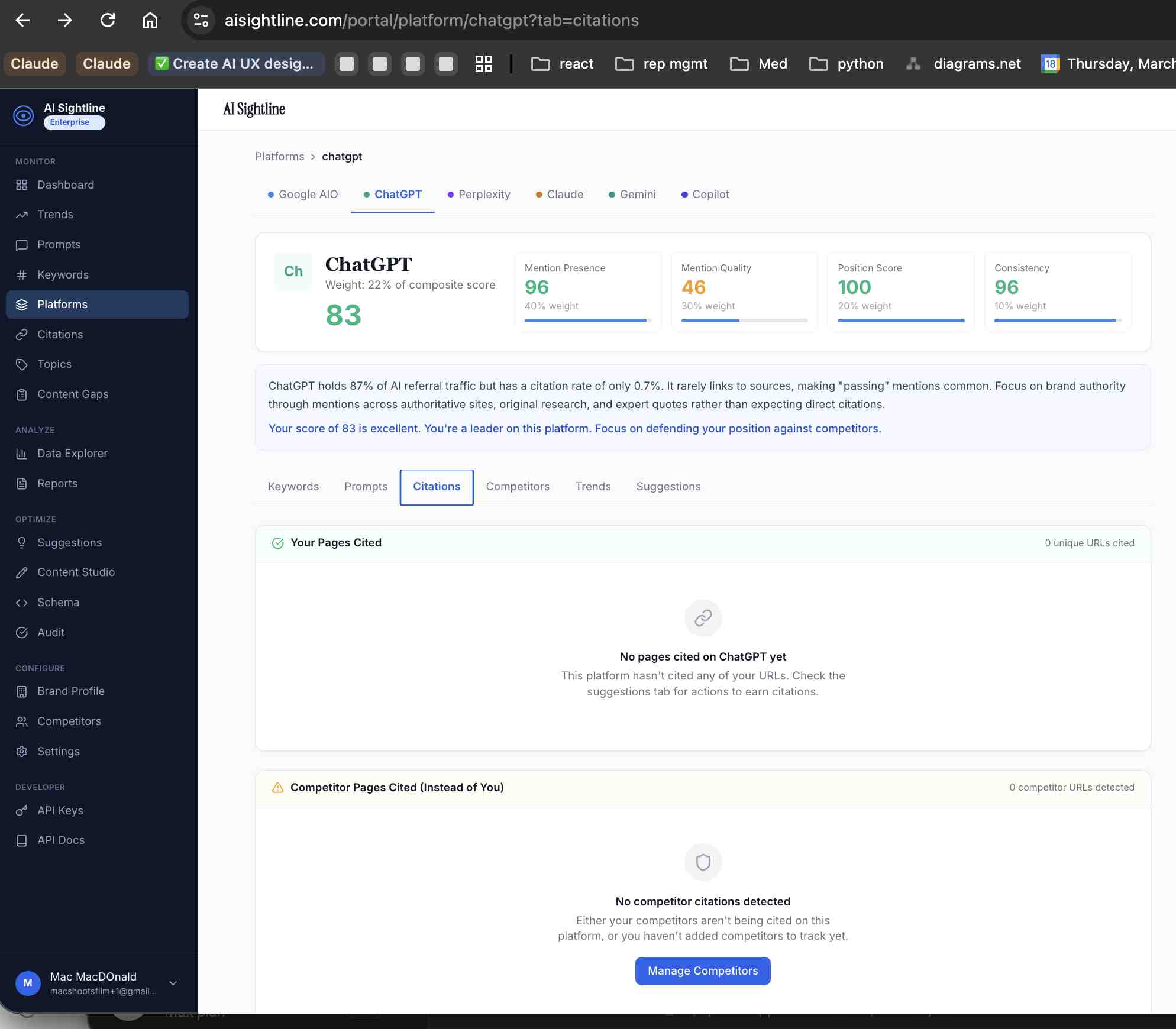
What Complete Schema Actually Looks Like
"Complete" schema means every recommended property is populated, not just the required ones. For Organization schema, complete means: name, url, logo, description, sameAs, contactPoint, and address. For Article schema, complete means: headline, author, datePublished, dateModified, publisher, image, and description.
Most sites have partial schema. The recommended properties are where the citation advantage lives.
| Schema Type | Required Fields | High-Impact Optional Fields |
|---|---|---|
| Organization | name, url | logo, sameAs, description, contactPoint |
| Article | headline, author | datePublished, image, publisher, wordCount |
| FAQPage | mainEntity | None, completeness is everything here |
| SoftwareApplication | name | offers, featureList, applicationCategory |
How AI Sightline Monitors Your Schema Health
AI Sightline's content audit automatically detects JSON-LD and microdata across your monitored pages, scores completeness against schema.org recommendations, and flags missing high-impact fields. You do not have to manually run schema validation tools every time you publish.
The Starter plan includes basic schema analysis. Pro at $149.95/month gives you full schema analysis across all your pages. Business and Agency plans add auto-generation of recommended schema blocks directly from your content, so your team can implement improvements without writing JSON by hand.
This matters because schema errors are silent. A malformed JSON-LD block will not throw a 404. It will just quietly stop working, and you will have no idea why your AI citation rate dropped.
The Connection Between Schema and AI Visibility Scores
AI Sightline's visibility score is a 0-100 composite that factors in mention presence, citation quality, position, and consistency across 6 AI platforms. Content audit scores, which include schema completeness, directly influence what our suggestions engine recommends as your highest-priority improvements.
In practice, teams that complete their schema audit and fill missing fields see measurable improvements in their visibility scores within 2-3 scan cycles. It is one of the highest-ROI technical improvements available because the effort is low and the signal value is high.
Start With the Basics, Then Audit Regularly
If you are starting from scratch, add Organization schema to every page today. That single step establishes your brand entity and gives AI models the foundational information they need to confidently associate your content with your name.
Then do the audit. Find out what is missing, what is broken, and what is incomplete. Schema is not a set-it-and-forget-it task, and the teams winning AI visibility are the ones checking it consistently.
Run a free visibility scan to see your current schema health alongside your AI citation rates across ChatGPT, Perplexity, Google AIO, Claude, Gemini, and Copilot. No credit card required.
What schema markup helps with AI search?
Article, FAQPage, HowTo, Product, and Organization are the highest-leverage schemas for AI engines. They give parsers a clean entity graph and let assistants extract structured answers without guessing from prose. Wikipedia-style infoboxes win when AI engines need a fact; schema is how you build your own.
Which schemas matter most for AI citations?
FAQPage drives direct quote citations because the Q&A pairs map cleanly to conversational queries. Article gives the assistant author, date, and topic signals it uses to weigh trust. Product schema is essential for ecommerce and SaaS because AI engines surface offers, ratings, and reviews inside answers.
Do I need JSON-LD or microdata?
JSON-LD. Google, Anthropic, OpenAI, and Perplexity all prefer it. Microdata still parses but is harder to maintain and offers no advantage. Put your JSON-LD in the document head or just before the closing body tag.
Does AI Sightline check my schema?
Yes. The schema_suggestions tool (Starter tier and above) detects existing schemas on any tracked page and recommends missing ones with ready-to-paste JSON-LD. Pro and above also run a full AI-readability content audit covering schema, structured data, FAQ sections, heading hierarchy, and freshness.
Get your free AI visibility score.
See how ChatGPT, Claude, Perplexity, Gemini, Google AIO, and Copilot talk about your brand.
Start freeSolo founder building AI visibility monitoring. Ships weekly. No venture capital, a lot of opinions about where AI search is going.